New Zealand - Nelson Nephrite
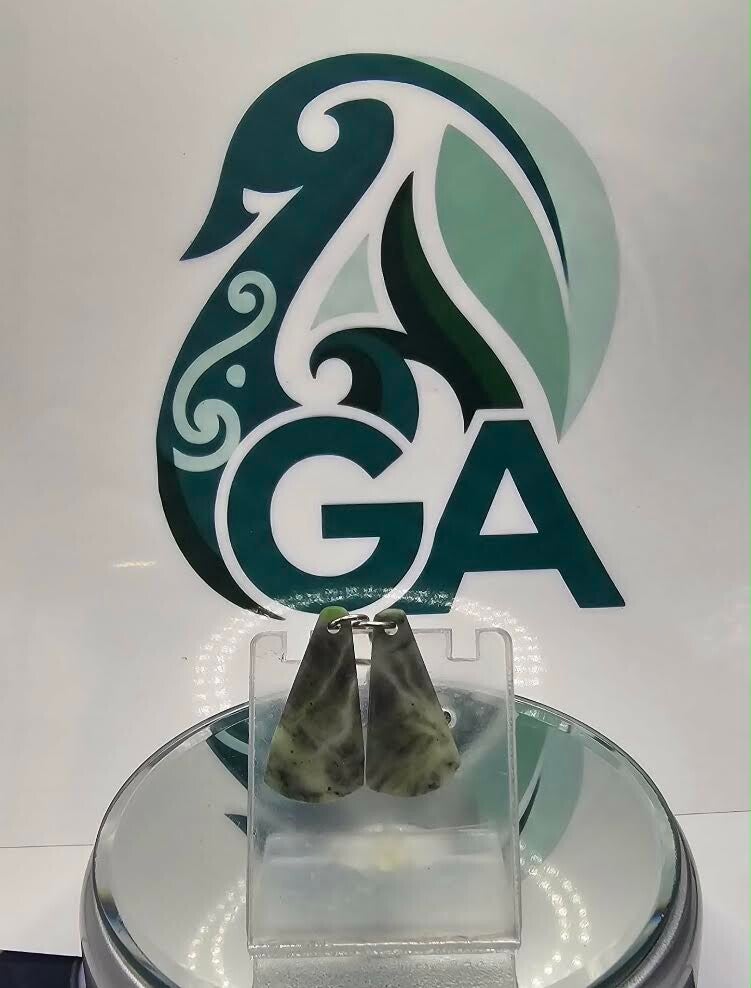
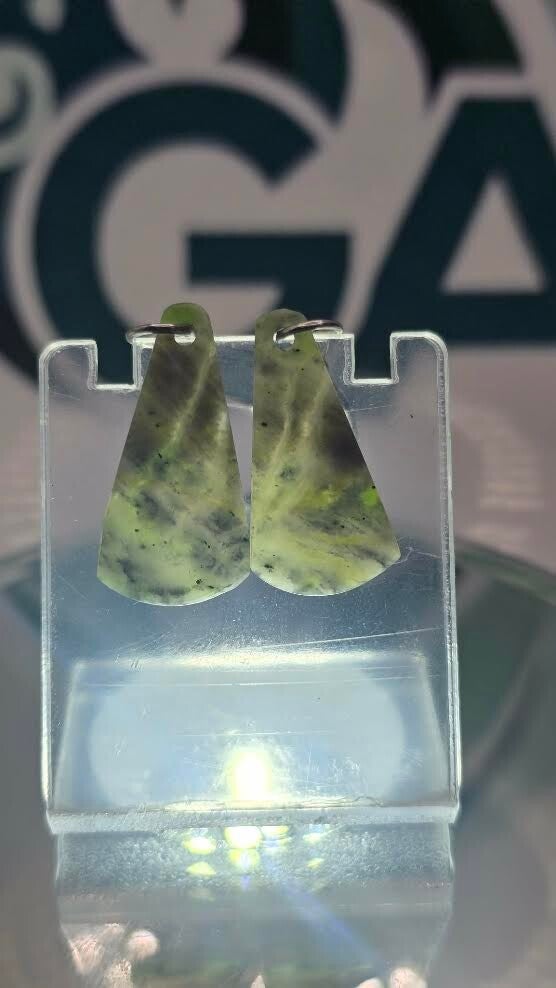
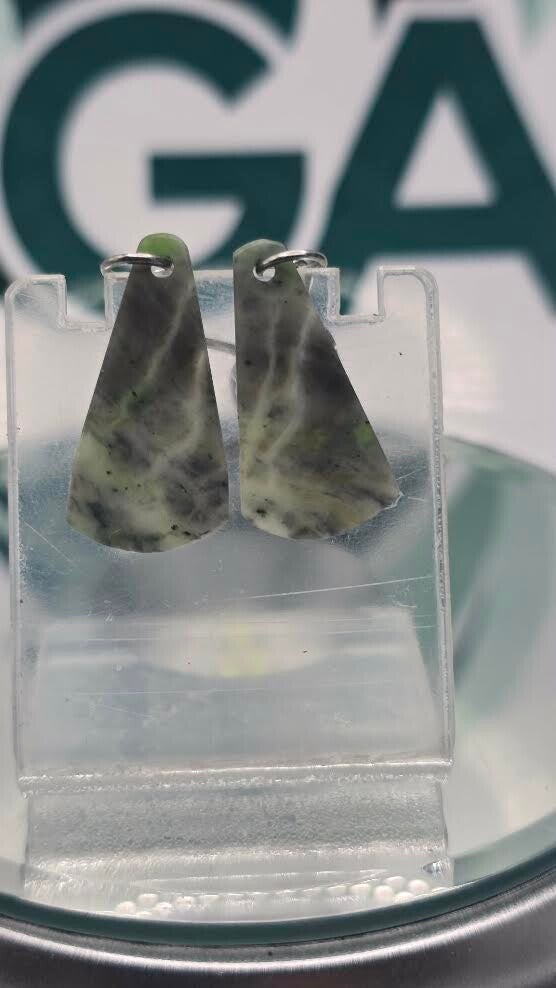
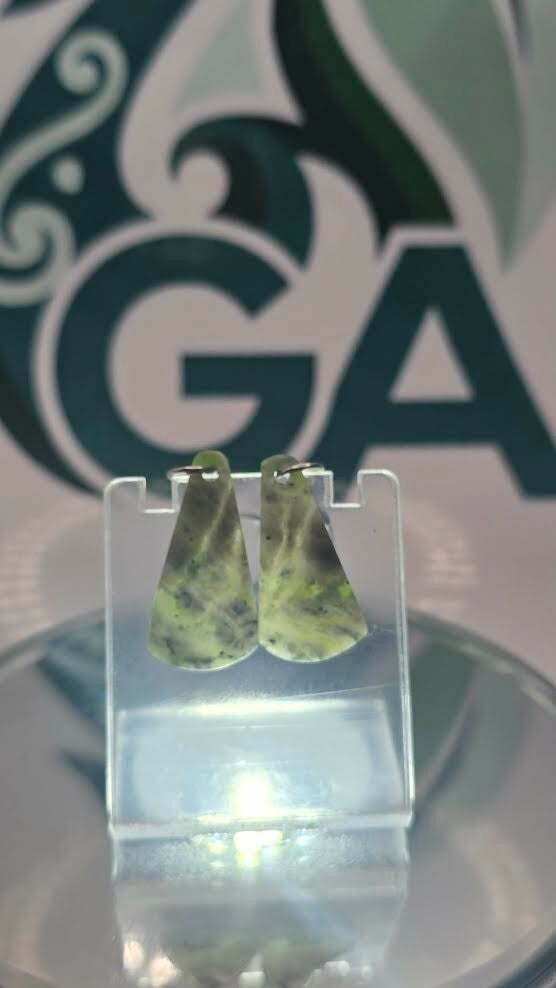
Roimata - Lightening
E18
Drop : 25 mm
Wide : 12.5mm
Weight : 2.1 g
Roimata is such a beautiful presentation to Ranginui & Papatuanuku
It is traditionally shaped like a teardrop and symbolizes, healing, comfort, & a deep emotional connection.
Tears & Grief, Compassion, Connection to land, Breavement and caring roles.
Our beautiful earrings are handmade Quality with a steady hand and a focus to transform into excellence.
<---------------------------------------------------------------------------------------------------->
Pounamu also name Nephrite:
On the South Island of New Zealand, in the cold, fast rivers that drain the Southern Alps, a dense green stone occurs in boulders, outcrops, and alluvial gravels. In te reo Māori it is pounamu. In English-language geology and commerce it is usually called nephrite jade, or simply New Zealand jade. The two names describe different things: one refers to a material embedded in Māori land, genealogy, and law; the other to a mineral category recognized by hardness, toughness, and microscopic structure. The historical interest lies in how one became the other, and how the transfer did not simply replace an older meaning but layered new identities onto a stone that already carried its own.
What Nephrite Is, and Why Its Properties Mattered
Nephrite is not a single mineral but a rock composed mainly of actinolite–tremolite amphiboles in a felted, interlocking fibrous structure. That microstructure gives it exceptional toughness, meaning resistance to fracture, even though its hardness is moderate on the Mohs scale. For carvers working without metal tools, toughness mattered more than scratch resistance. A tough stone can be sawn with abrasive sand and water, drilled with a wooden or bone point and grit, and ground into thin, strong forms that survive impact.
What the Transformation Reveals
The history of pounamu is not a story of a gemstone becoming valuable. It is a story of a material whose value was already deep and socially embedded, and of how colonialism, law, museums, tourism, and national identity reorganized that value without ever fully controlling it. Māori relationships with pounamu survived the reclassification, sometimes by adapting to new markets, sometimes by asserting customary rights, and sometimes by retelling old histories in new institutional settings.
The result is a stone that can be understood in at least three overlapping ways: as a taonga with genealogical and spiritual significance, as a mineral resource subject to state regulation, and as a national symbol marketed to visitors. Holding those meanings together, rather than collapsing them into a single narrative, is the more accurate history and the more useful one for anyone trying to understand how a gemstone becomes part of a nation's idea of itself.